Article

Your bags are half-packed, the car seat is by the door, and one question keeps nagging: how will your baby sleep somewhere new when the only way they fall asleep is feeding or being rocked in your arms? Here’s the reassuring part about baby sleep while traveling: the thing your child relies on most to fall asleep is you, and you’re coming on the trip. You don’t need to fix anything before you leave. A safe, familiar setup, some flexibility while you’re away, and a calm reset once you’re home will carry you through.
Why trips unsettle babies who are fed or rocked to sleep
Everyone surfaces briefly between sleep cycles several times a night. Most of the time we don’t remember it. Children tend to look for the same conditions they fell asleep with, so a baby who drifted off feeding or being rocked often needs that help again to get back to sleep. This is the idea of sleep associations that NHS sleep guidance describes. Research has also linked more hands-on settling at bedtime with more frequent night waking.
None of this means you’ve done something wrong. Needing help at night is common well past the first birthday: in one observational study, half of 12-month-olds still needed a parent’s help to resettle after waking.
Travel piles extra pressure on top of that pattern:
- An unfamiliar room, with new sounds, light and smells.
- Later bedtimes and skipped naps, which can leave your child overtired and harder to settle.
- Sharing a room, so your baby can see and hear you when they stir.
- Excitement, new faces, and sometimes a time-zone change.
The upside is that your child’s strongest sleep cue travels with you. A trip is a good time to lean on it, not take it away.
Before you leave: pack the sleep cues that travel
Don’t start a big sleep change right before the trip. If you’ve been thinking about helping your child fall asleep without feeding or rocking, wait until you’re home and settled. Change goes more smoothly when you can be consistent for a couple of weeks. (Our guide From Rocked to Rested includes a check for whether now is a good time to start.)
Do a trial run. If your child will sleep in a portable crib or play yard, Children’s Health Queensland suggests practising naps in it about a week before you go, so it isn’t brand new on the first night away.
Pack the cues that say “sleep”:
- The same sleep sack your child wears at home.
- The bedtime book and song you always use.
- A white-noise machine or app, if you use one at home. Place it as far from your child as possible, at the lowest volume that works.
- A fitted sheet made for that portable crib.
- Something to darken a bright window.
- For toddlers over 12 months, their usual comfort toy.
Keep all of it in one bag you can reach on arrival.

Crossing time zones? Shift naps and bedtime by about 10–15 minutes a day in the days or weeks before you travel, moving toward the new local time.
Start rested. Protect naps and bedtime in the days before you leave, so you’re not starting the trip already short on sleep.
Safe sleep away from home: the non-negotiables
New places come with new hazards, and holiday houses are full of well-meaning people with soft blankets. The AAP’s safe sleep basics don’t change when you travel:
- Your baby sleeps on their back, on a firm, flat surface.
- There are no pillows, blankets, bumpers or toys in the sleep space.
- Your baby sleeps alone, in a crib, bassinet or play yard that meets federal safety standards.
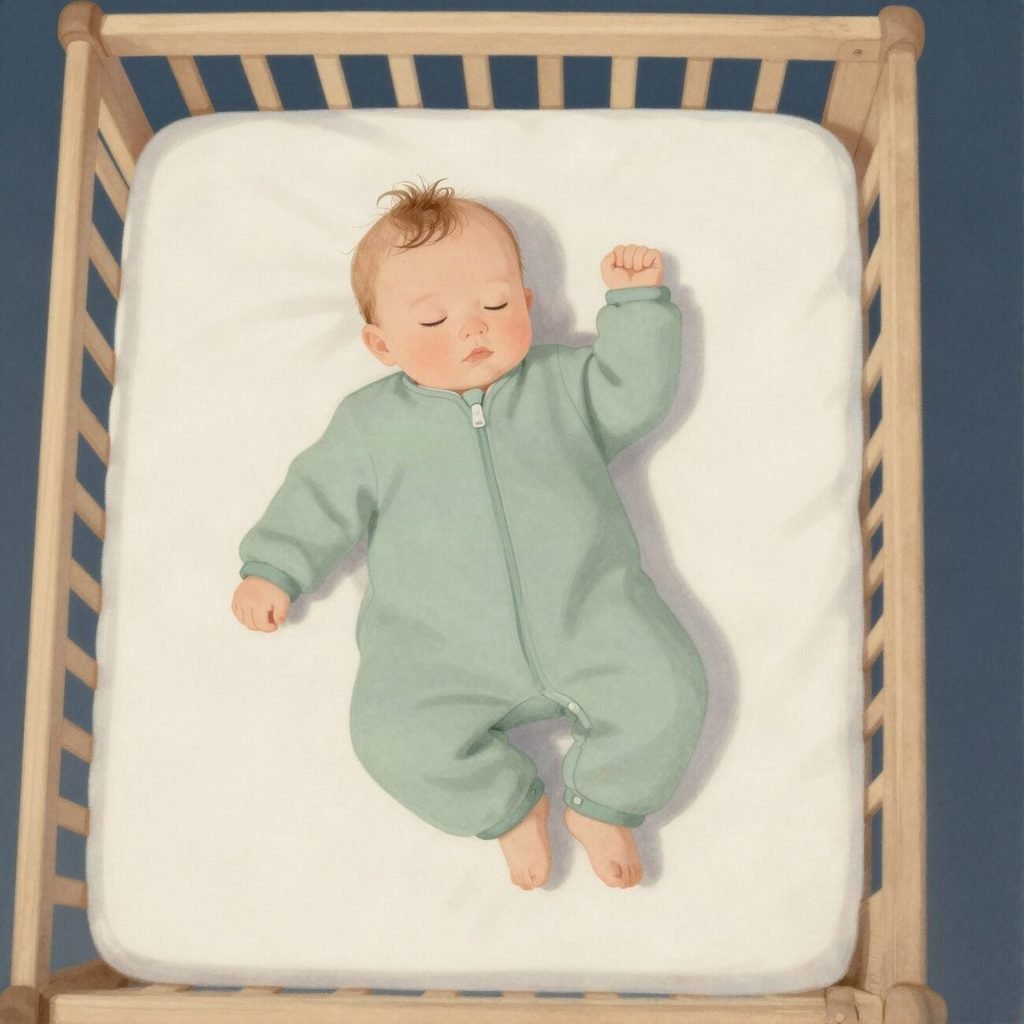
Use only the play yard’s own mattress. The CPSC warns against adding extra mattresses, pillows or cushions, because a baby can become trapped and suffocate in the gaps.
Car seats are for the car. A properly installed car seat is a safe place to doze while you’re driving. The AAP is clear that it isn’t a safe place to sleep once you arrive. Move your sleeping baby to a flat sleep space when you get there. On long drives, many safety experts suggest breaks at least every two hours.
No couches, armchairs, air mattresses or adult beds. None of these is a safe sleep surface for a baby, however tired everyone is. If you bring your baby into your bed for a night feed, the AAP advises returning them to their own sleep space before you fall asleep.
Check borrowed and hotel cribs. Make sure no parts are missing and the sheet fits snugly. Check that the crib hasn’t been recalled, especially if it’s borrowed or secondhand, as Overlake Hospital advises.
Brief your hosts. Grandparents may remember different advice. A quick, friendly “back, alone, empty crib” saves awkward moments at 2 a.m.
During the trip: naps, late nights and 2 a.m. wake-ups
Keep doing what works. If your baby falls asleep feeding or being rocked, do that. Keep the order of your bedtime routine the same, even if it’s shorter. Familiar steps tell your child what comes next, in a place where everything else has changed.
Naps: aim for one good one. Try to give your child at least one nap a day in their travel crib, at roughly the usual time. Let the others happen on the go, in the stroller or carrier. Children’s Health Queensland’s advice is to aim for routine but stay flexible. Keep an eye on your child during on-the-go naps, and move them to a flat sleep space for a long sleep.
Balance late nights. Holiday dinners run late. Follow a late evening with an earlier bedtime the next night where you can, a balance Huckleberry’s sleep team recommends, and keep the following morning slow.
At 2 a.m., speed beats strategy. When you’re sharing a room, or a thin wall, with relatives, the goal is everyone back to sleep. If a quick feed or a few minutes of rocking does it, that’s the right call for this trip.
- Keep lights low and your voice soft.
- Settle your child back in their own sleep space.
- If your baby wakes every time they spot you, place the play yard so they can’t see your bed easily. A corner or the far side of a wardrobe works. Never drape anything over the crib or prop items against it.
Expect a wobble or two. Extra waking in a new place is normal. Offer comfort, and don’t read too much into a rough night or two.
Back home: how to get sleep back on track, and when to change the habit
Go straight back to your normal rhythm. Use your usual sleep space, your usual times and your full bedtime routine from the first night home. Expect a few unsettled days while your child readjusts, and stay calm and consistent.
Use daylight to reset after a time-zone change. Get outside in the morning, keep evenings dim, and move meals and naps to local time.
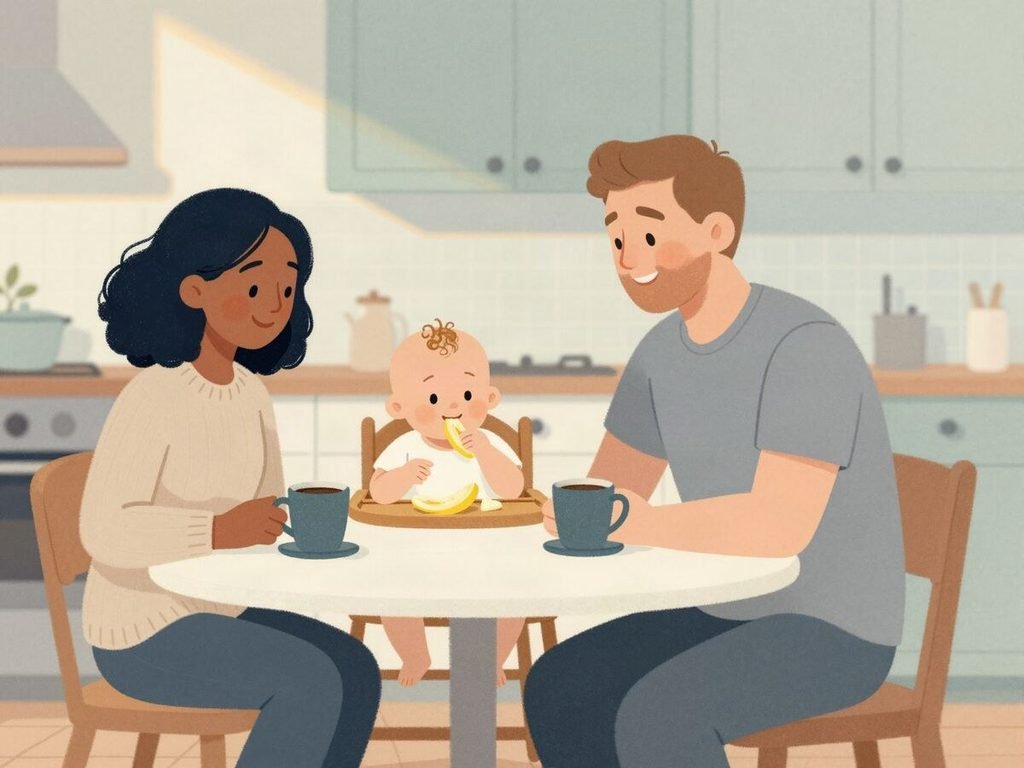
Then ask the bigger question. Getting back to how things were before the trip is one goal. Changing how your child falls asleep is a different one. Give the first a week or so. If your old pattern of feeding or rocking to sleep works for your family, there’s nothing you need to change.
You might decide it’s time for a change if:
- your child wakes many times a night and only feeding or rocking brings them back;
- naps stay at 30–45 minutes;
- everyone is running on empty.
Pick a stretch of a couple of weeks with no more trips, illness or big changes coming up. Then make a plan you can stick to.
If you want a step-by-step plan for that, From Rocked to Rested is written for parents of babies and toddlers aged 6 months to 3 years who only fall asleep being fed or rocked. It includes:
- a 72-hour quick start;
- three methods to choose from: Gradual Fade, Check-and-Console and Bedtime Shift;
- guidance on night feeds, naps and toddlers;
- 12 printable trackers and worksheets.
When to call your pediatrician. Get advice if night waking comes with any of these:
- fever;
- ear pain after a flight;
- loud snoring or pauses in breathing;
- a cough that won’t settle.
Also call if your gut tells you something isn’t right. Comfort comes first when your child is unwell. Sleep plans can wait.
Travel with a baby who needs you to fall asleep isn’t a problem to solve before you go. Bring the cues, keep it safe, say yes to the extra cuddles, and save any bigger changes for when you’re home.